
Nifty Lot Size Changed from 75 to 65 – Impact, Margin & Trading Guide
Nifty lot size reduced from 75 to 65. Learn why NSE changed it, impact on margin, profit, loss, and best trading strategies.Nifty lot size reduced from 75 to 65. Learn why NSE changed it, impact on margin, profit, loss, and best trading strategies.
 Admin
Admin
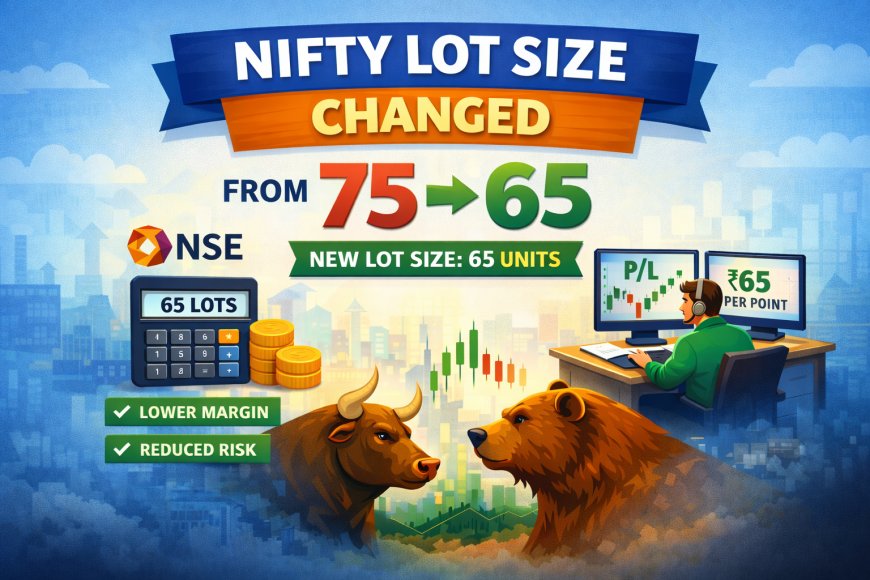
The National Stock Exchange (NSE) periodically revises derivative contract specifications to maintain market efficiency and manage risk. One of the most discussed changes among traders is the Nifty 50 lot size reduction from 75 to 65. This change has directly impacted option buyers, sellers, and intraday traders across India.
In this blog, we’ll explain why the Nifty lot size was changed, its impact on trading, margin requirements, and strategies traders should adapt.
What Is Nifty Lot Size?
The lot size refers to the fixed number of units in one futures or options contract. Traders cannot buy or sell a single unit in derivatives; they must trade in predefined lot sizes.
-
Old Nifty lot size: 75 units
-
New Nifty lot size: 65 units
This means every Nifty option or futures contract now represents 65 units of the Nifty index instead of 75.
Why Did NSE Change Nifty Lot Size from 75 to 65?
The main reason for the lot size revision is risk management and retail trader participation.
Key reasons include:
-
To keep the contract value within ₹15–20 lakh, as per SEBI guidelines
-
To reduce capital and margin requirements for retail traders
-
To control excessive speculation in the derivatives market
-
To make Nifty trading more accessible to small traders
As the Nifty index value increased, the contract value also became larger, making it expensive for new traders. Reducing the lot size helped balance this.
Impact of Nifty Lot Size Change on Traders
1. Lower Margin Requirement
With a reduced lot size, traders now need less capital to trade Nifty options and futures.
Example:
If Nifty is at 22,000
-
Old contract value: 22,000 × 75 = ₹15.4 lakh
-
New contract value: 22,000 × 65 = ₹14.3 lakh
This lowers margin and risk exposure.
2. Reduced Profit and Loss per Point
Each 1-point move in Nifty now gives:
-
Earlier: ₹75 per lot
-
Now: ₹65 per lot
This helps beginners manage losses more comfortably.
3. Better Risk Management
Smaller lot sizes allow traders to:
-
Take controlled trades
-
Use tighter stop losses
-
Scale positions gradually
Should Traders Change Their Strategy?
Yes, slightly.
-
Option buyers benefit from reduced premium exposure
-
Option sellers may need more lots to generate the same income
-
Scalpers can trade with better risk control
-
Hedging strategies become more efficient
Overall, the change favors disciplined and risk-aware traders.
Final Thoughts
The Nifty lot size change from 75 to 65 is a positive step for the Indian derivatives market. It improves accessibility, lowers capital pressure, and encourages safer trading practices—especially for retail participants.
If you are a beginner or a part-time trader, this change works in your favor. However, always adjust your position sizing, risk management, and expectations accordingly.